
Why the Bahamas Tariff Act Matters
The Bahamas Tariff Act is the legal foundation for customs duties on imported goods. If you calculate landed costs, prepare customs entries, or advise clients, you will routinely perform a tariff search to identify the correct rates and conditions. Reading the Act correctly helps you avoid penalties, reduce delays, and stay compliant.
How the Tariff Act Is Structured
The Act follows the international Harmonized System (HS). It’s organized into chapters, each grouping related goods, then subdivided into headings, subheadings, and national tariff lines. This hierarchical design enables precise classification during any Bahamas tariff search.
Examples of chapters
- 02 – Meat and edible meat offal
- 27 – Mineral fuels, oils and products of their distillation
- 87 – Vehicles, tractors and other transport equipment
Understanding Tariff Codes
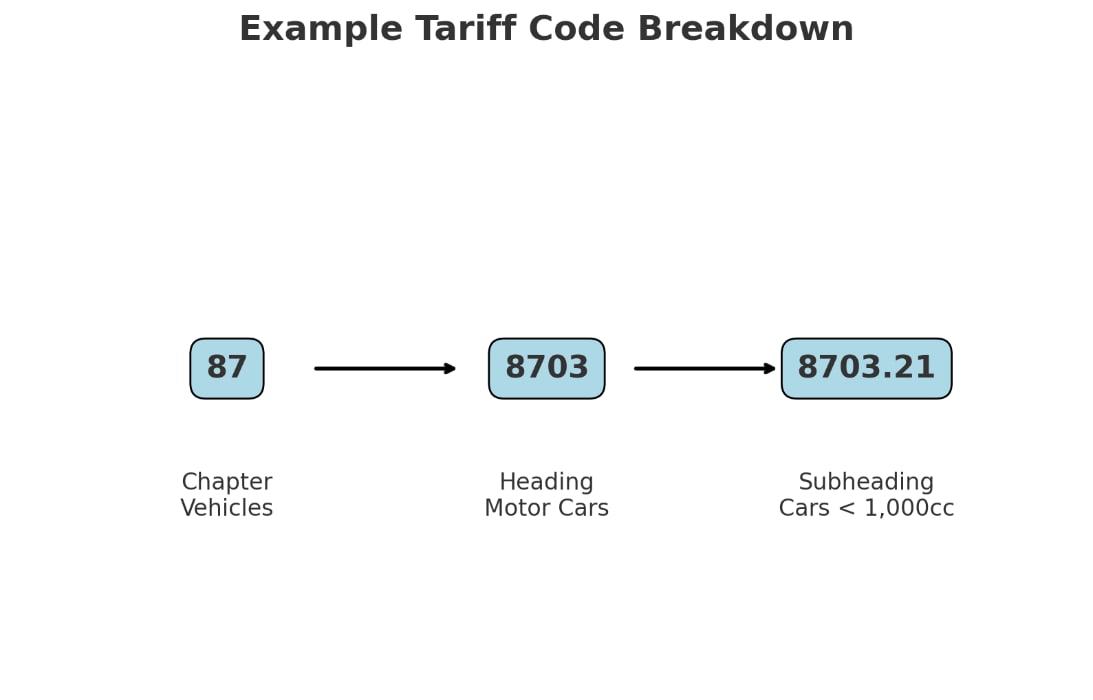
Each product is identified by a numerical HS code. When you conduct a customs tariff search, read the digits from broad to specific:
- First two digits – Chapter (e.g., 87 = Vehicles)
- Next two digits – Heading (e.g., 8703 = Motor cars)
- Next two digits – Subheading (e.g., 8703.21 = Cars under 1,000cc)
This layered structure supports consistent classification across borders and improves the accuracy of any Bahamas tariff search.
General Rate vs. Specific Rate
Some tariff lines may involve both approaches or include notes that determine which rate applies. Always confirm the correct basis during your tariff search.
Excise Rates & the Two Asterisks **
When a tariff line shows two asterisks (**), the item is also subject to excise duty. Excise rates are not listed inside the Tariff Act—they are found separately in the Excise Act. Typical excisable goods include alcohol, tobacco, and fuel. If you see ** during a customs tariff search, cross‑reference the Excise Act to calculate the full payable amount.
Tariff Amendments
The government periodically publishes Tariff Amendments that modify rates, create new lines, or reclassify goods. These changes are legally binding and must be read alongside the principal Act. For a reliable Bahamas tariff search, ensure you are using the most current amendments.
What the Tariff Act Doesn’t Show
Although the Act is authoritative, it may not display every figure you need for landed‑cost analysis:
- Excise rates (see the Excise Act)
- Environmental levies and certain fees
- Exemptions, conditional reliefs, or special programs published elsewhere
That’s why a straightforward tariff search often requires multiple sources.
How Importable Simplifies Tariff Search
Importable consolidates what importers need into one searchable platform:
- HS codes and clear descriptions
- Customs duty rates (general & specific)
- Excise duty indicators and rates from the Excise Act
- Environmental levies and other charges
- Latest Tariff Amendments applied automatically
Result: A Bahamas tariff search that takes seconds—not hours—and fewer costly errors.
Frequently Asked Questions
1) How do I perform a Bahamas tariff search?
Locate the correct chapter and HS code in the official Tariff Act, or use a modern search tool that lets you query by keyword, description, or code and returns all applicable duties instantly.
2) What’s the difference between a general rate and a specific rate?
A general rate (ad valorem) is a percentage of customs value, while a specific rate is a fixed amount per unit, weight, or volume.
3) Why do some tariff lines have two asterisks (**)?
They signal that the product also carries excise duty under the Excise Act. Always check both documents.
4) How do tariff amendments affect my customs tariff search?
Amendments update rates and classifications. Use current versions or a system that tracks amendments automatically.
5) Does the Tariff Act include all fees and levies?
No. It focuses on customs duties. Excise and environmental levies for instance are found elsewhere.